
Architecture
Polos has two main components: Orchestrator – Manages workflow execution, handles scheduling, concurrency control, queueing, and automatic retries. The orchestrator tracks workflow state and pushes execution requests to available workers. Workers – Execute your workflow code. Each worker runs a FastAPI server that receives execution requests from the orchestrator, runs your Python code logic, and reports results back.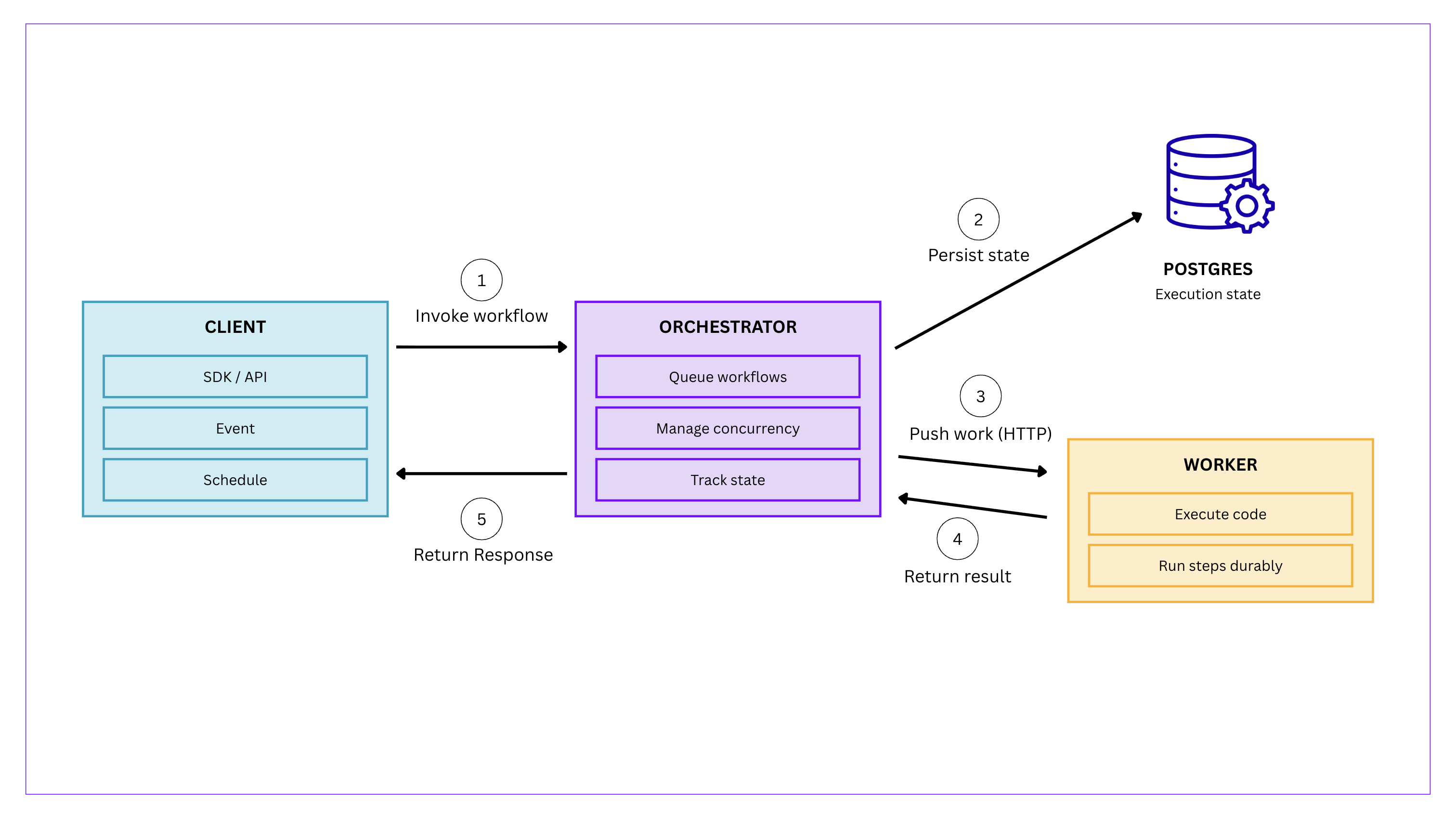
How it works
1. Workflow invocationWhen an agent/workflow is started, the orchestrator receives the request and queues it for execution. 2. Execution
The orchestrator pushes the workflow execution to an available worker via HTTP. The worker executes your code step-by-step, persisting state after each step. 3. Concurrency control
If too many workflow instances are running, the orchestrator queues new runs until execution slots open up. You can configure concurrency limits per queue. 4. Failure handling
If a worker crashes or a step fails, the orchestrator automatically retries the workflow. It resumes from the last completed step - no lost progress. 5. Workflow composition
When a workflow invokes child workflows, the orchestrator suspends the parent (preserving its state) and executes children. Once children complete, the parent resumes with their results.